
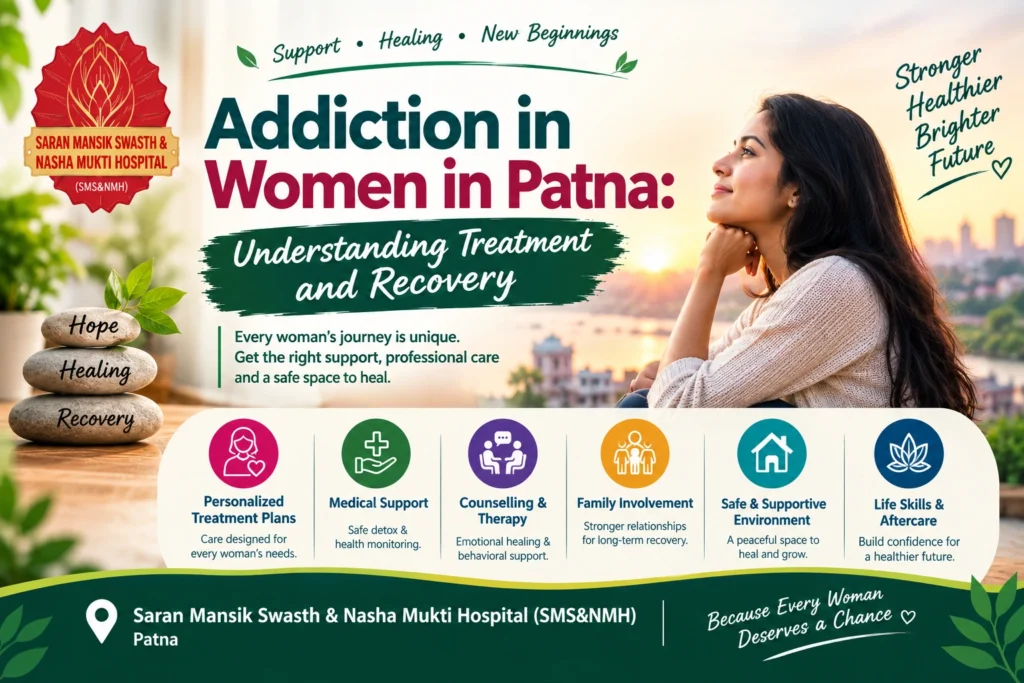
Addiction in Women in Patna isn’t something families talk about enough, even though so many of them are quietly dealing with it at home. Substance use can chip away at a woman’s physical health, her emotional balance, her closest relationships, her work, and, honestly, just her day-to-day peace of mind. But here’s the part worth saying clearly: asking for help is not a sign of weakness. It never was. With timely professional support, counselling, proper medical care, and a recovery plan that actually fits her life, most women can move toward something steadier and healthier.
No two stories look the same. For one woman it might be stressful. For another, it’s an old wound that never quite healed, or family tension that built up over years, or just plain social pressure. Sometimes it’s simply time, years of exposure to a substance, that slowly tips things over. Figuring out what’s really driving the pattern is usually where finding the right addiction treatment for women actually begins.
Understanding Addiction in Women in Patna
Addiction in Women in Patna can develop around alcohol, prescription medicines, opioids, cannabis, stimulants, or other substances, and it rarely shows up as a dramatic turning point. More often, it creeps in. What starts out as occasional, almost harmless use can quietly become something much harder to control once the brain and body get used to it.
There’s also a practical side to this that doesn’t get discussed much. Women often hold back from seeking treatment because of family duties, fear of being judged, money worries, or simply not wanting anyone to find out. None of that makes the problem less real. If anything, spotting the signs early is what tends to make the biggest difference.
Common signs of substance dependence in women
A few things worth paying attention to:
- Frequently thinking about getting or using a substance
- Struggling to cut back, even when you want to
- Needing more of it just to feel the usual effect
- Withdrawal symptoms once use stops
- Losing interest in work, studies, or family life
- Sleep or eating habits changing without a clear reason
- Mood swings, irritability, anxiety, general emotional unsteadiness
- Continuing to use even when it’s clearly causing problems
- Spending a lot of time recovering from the after-effects
- Hiding substance use from family members
One sign on its own doesn’t necessarily mean dependence. That’s really something only a proper professional assessment can confirm.
Causes and Risk Factors Behind Women’s Substance Use
There’s almost never just one cause. Usually it’s a handful of things, personal, psychological, social, environmental, all layered together in ways that aren’t always obvious from the outside.
Emotional stress and mental health
Ongoing stress, anxiety, depression, grief, or emotional pain that never really got resolved can push someone toward using a substance just to cope for a while. It might bring relief in the moment, sure. But used again and again, it tends to create more difficulty than it solves, both physically and emotionally.
Family and social pressure
Conflict at home, tension between family members, isolation, the influence of peers, or simply a hard home environment, these can all feed into coping habits that aren’t really healthy. This is exactly why family involvement, when it’s safe and actually wanted, matters so much during recovery.
Trauma and difficult life experiences
A lot of the time, trauma sits quietly underneath substance use, unspoken for years. Professional counselling gives a woman room to work through those experiences without being judged for them, and to build coping strategies that hold up when life gets hard again.
Addiction in Women and Its Effects on Daily Life
Substance dependence rarely stays confined to physical health alone. It tends to spread, quietly, into almost every corner of daily life.
| Area | Possible impact |
| Physical health | Sleep problems, fatigue, poor nutrition, other health complications |
| Emotional wellbeing | Anxiety, mood changes, irritability, emotional distress |
| Family life | Conflict, loss of trust, communication that starts breaking down |
| Work or education | Reduced focus, absenteeism, performance slipping |
| Finances | Rising costs tied to substance use |
| Social life | Pulling away from friends and supportive people |
The impact looks different for everyone, and that’s exactly why Addiction in Women in Patna has to be built around the individual rather than a template that assumes one plan fits all.
Treatment for Addiction in Women in Patna
Good Addiction in Women in Patna usually starts by getting to know the person, not just the substance she’s been using.
Assessment and personalised treatment planning
This first stage is really just an honest conversation, about substance use, physical health, emotional wellbeing, past treatment attempts, family situation, and what recovery would actually look like for her. It gives the treatment team a real sense of the support that’s needed.
Medical supervision and detoxification
For some women, stopping a substance abruptly can bring on withdrawal symptoms, sometimes serious ones. Depending on the substance, how long it’s been used, and general health, medical detoxification may be needed.
Detox is mainly about helping the body get through withdrawal safely. It’s not, on its own, the whole treatment though. What comes after matters just as much, maybe more, for recovery that actually lasts.
Counselling and behavioural support
Counselling helps women notice their own triggers, understand patterns they may never have named before, manage emotions with a bit more steadiness, and build coping skills that hold up in real life, not just in a session.
Sessions typically touch on:
- Identifying personal triggers
- Managing stress and cravings
- Building confidence
- Improving emotional regulation
- Developing healthy daily routines
- Preventing relapse
- Strengthening communication skills
Women’s Rehab and Recovery Support in Patna
A dedicated treatment setting offers something hard to find at home: privacy, structure, professional supervision, and a bit of real distance from whatever situations tend to pull a person back toward substance use.
If you’re looking into Addiction in Women in Patna, it’s worth asking directly about the centre’s treatment approach, how qualified the staff are, what counselling services are actually offered, medical support, accommodation, whether family can be involved, and what aftercare looks like once treatment ends. Don’t be shy about asking. A good centre will welcome the questions.
Treatment should always respect a woman’s dignity and give her a safe place to speak honestly about what she’s going through.
Family support during recovery
Family can genuinely help here, but only when the person in treatment actually wants that involvement.
Useful support usually looks like:
- Listening without jumping to criticism
- Encouraging professional treatment
- Supporting healthy daily routines
- Steering clear of arguments during hard moments
- Learning more about addiction and relapse
- Keeping reasonable boundaries
- Staying encouraging about continued care even after residential treatment ends
Family support works best alongside professional treatment, not instead of it.
Preventing Relapse After Addiction Treatment
Recovery doesn’t just wrap up the day a residential programme ends. Going back to normal life often brings back old stressors and familiar triggers faster than people expect.
A practical relapse prevention plan might include:
- Continuing counselling where it’s recommended
- Recognising situations tied to past substance use
- Keeping a regular sleep and meal routine
- Staying connected to supportive people
- Following medical advice consistently
- Building healthy habits and hobbies that actually fit her life
- Reaching out early, the moment cravings or emotional strain start creeping back
A relapse can be a serious sign that more support is needed. It shouldn’t be treated as a reason to give up on recovery altogether. It rarely is.
Choosing a Ladies Nasha Mukti Kendra in Patna
Families usually walk in with a long list of questions, and that’s fair. A good centre answers them clearly, without making promises that sound a little too good to be true.
Before admission, it’s worth asking:
- Is there professional medical supervision?
- Is counselling included in the programme?
- Are treatment plans genuinely personalised?
- How are withdrawal symptoms managed?
- Is family counseling available?
- What happens after discharge?
- How is privacy and confidentiality handled?
- What support is available if more care becomes necessary later?
For women and families looking for dependable women’s rehabilitation support, Saran Mansik Swasth & Nasha Mukti Hospital offers a treatment setting built around recovery, professional guidance, and individual needs.
When Should a Woman Seek Professional Help?
Waiting for things to get worse usually just makes recovery harder later on. It’s worth reaching out once substance use becomes difficult to control, starts affecting relationships or everyday responsibilities, raises health concerns, or keeps happening no matter how many times someone’s tried to stop on their own.
Getting support early makes it a lot easier to see the problem clearly and figure out a real path forward. And if withdrawal symptoms are a possibility, stopping suddenly without medical guidance just isn’t safe for every substance.
Start the recovery conversation
That first conversation doesn’t need to settle everything at once. Talking with a qualified treatment professional can help a woman, or her family, understand what’s actually available and what kind of care fits.
Reliable Information About Addiction and Recovery
For more evidence-based information on substance use, treatment, prevention, and recovery, the World Health Organization (WHO) offers public health resources that can help families understand substance-related problems a little better, and why the right care matters so much.
It’s worth spending a little time with information from recognised health authorities before sitting down to talk through treatment options with a qualified professional.
Conclusion for Addiction in Women
Addiction in Women can touch health, emotions, relationships, responsibilities, and quality of life in ways that aren’t always visible from the outside. But professional treatment offers a real, structured way forward. At Saran Mansik Swasth & Nasha Mukti Hospital, assessment, medical care where needed, counselling, family support, and steady aftercare come together to build a recovery plan that supports lasting progress.
For families considering a Ladies Nasha Mukti Kendra in Patna, the most important step is simple, though not always easy: seek the right professional guidance, and choose care that genuinely fits her needs. Recovery takes patience and steady support. And asking for help, even just once, can be the beginning of real change.
FAQs for Addiction in Women
1. What are the common signs of Addiction in Women?
Common signs include difficulty controlling substance use, cravings, withdrawal symptoms, changes in behaviour, declining work or family responsibilities, and continued use despite the problems it’s causing. A professional assessment gives the clearest picture.
2. Why do women develop substance addiction?
There’s rarely a single reason. Stress, trauma, emotional difficulties, family problems, social influences, mental health concerns, and repeated exposure to addictive substances can all play a part, and the mix is different for everyone.
3. Is women’s addiction treatment different from men’s treatment?
The core principles are fairly similar, but individual needs can vary quite a bit. Women often benefit from treatment that takes privacy, emotional wellbeing, family responsibilities, trauma, and physical health properly into account.
4. How long does addiction treatment take?
It depends on the substance involved, how severe the dependence is, overall health, past treatment history, and what the person actually needs going forward. A professional assessment helps set realistic expectations.
5. Can addiction be treated without detox?
Some people don’t need medically supervised detoxification. Others do, because withdrawal can get medically complicated fast. Either way, this is a decision best made together with qualified healthcare professionals, not alone.