
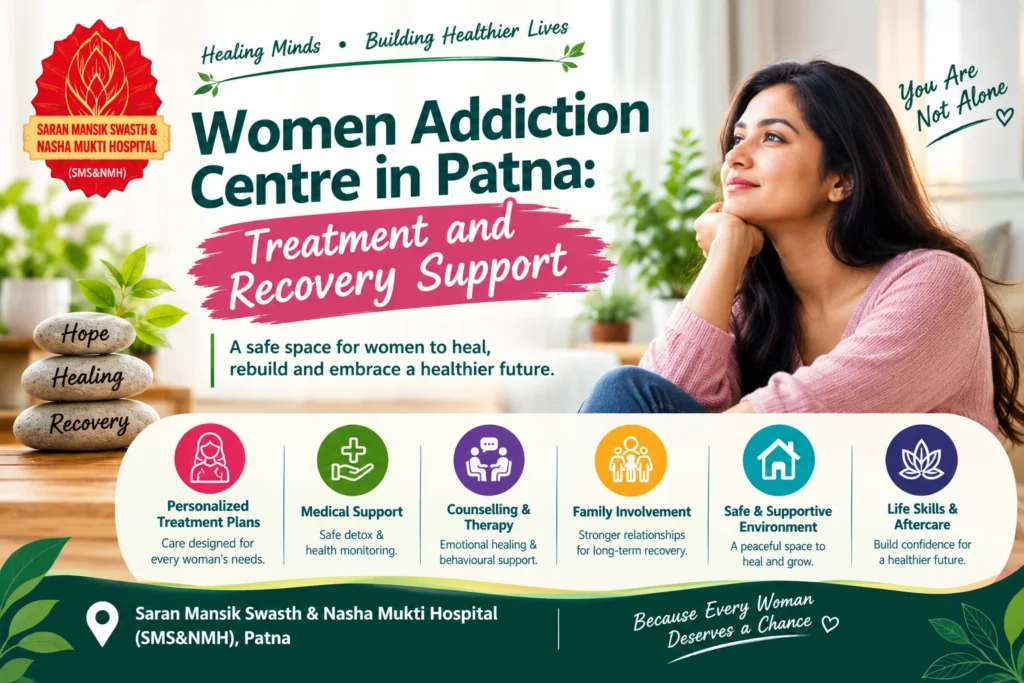
Nobody wakes up one day and decides to lose control of their life. For most women, it creeps in. A drink to unwind after a long day turns into a drink every night. A tablet for sleep becomes a tablet for everything. Before long, health, sleep, work and family life all feel a little off, and she’s too scared to say why. If that sounds close to home, a Women Addiction Centre in Patna can be the place where things finally start to change. You get trained people, private conversations, medical help when it’s needed, and a plan that fits you, not someone else.
Here’s something worth saying plainly. Addiction isn’t a weakness, and it isn’t a character flaw. The body gets used to a substance, the mind leans on it for comfort, and daily triggers keep pulling you back. That’s why good addiction treatment never stops at the substance. It looks at the whole woman, her life, her stress and her story.
Why a Women Addiction Centre in Patna Can Be Important
Ask any woman who has thought about getting help, and she’ll tell you the hardest part wasn’t the decision. It was everything around it. Who will look after the kids? What will relatives say? Will people find out? Those worries are real, and they stop many women from calling anyone at all.
A women focused centre takes much of that pressure away. The staff understand these fears, and the other patients share the same background. So it becomes easier to speak honestly, and honest talk is where recovery begins.
Support designed around individual needs
Two women can walk into the same centre with very different stories. One might need alcohol addiction treatment after years of drinking in secret. Another might be dependent on painkillers, sleeping pills, cannabis or opioids. Some started using during a rough patch at home. Others carry old trauma or a heavy load of anxiety.
So a good team doesn’t hand out a ready made plan.
They usually want to know about:
- What substance she uses and how much
- How long it has been going on
- Her physical health
- How she feels emotionally
- Whether she has tried to quit before
- What happened during earlier withdrawals
- What life at home looks like
- What she herself wants from recovery
- What kind of support she’ll need later
Getting this right matters more than any fancy facility. It’s the heart of proper rehabilitation for women.
Addiction in Women in Patna: Recognising the Warning Signs
Addiction in Women in Patna is often invisible from the outside. Many women learn to hide it very well, simply because the shame is so heavy. They smile at family gatherings, finish their chores and keep everything looking normal. Inside, it’s a different story.
Common signs that should not be ignored
If you’re worried about someone you love, or about yourself, look out for these:
- Cravings that feel impossible to ignore
- Failed attempts to cut down or quit
- Needing more of the substance to get the same effect
- Shaking, sweating, restlessness or anxiety when she stops
- Mood swings that seem to come from nowhere
- Trouble sleeping, or a change in appetite
- Dropping hobbies and friends she used to love
- Missing work or ignoring responsibilities at home
- Unexplained money problems
- Using again even after health scares or arguments
- Hiding bottles, tablets or phone messages
One or two of these don’t mean someone is addicted. Life is messy, after all. But if several sound familiar, it’s wise to get a proper assessment. A trained professional can tell what’s really happening and suggest the right drug addiction treatment or alcohol programme.
What Treatment Is Available at a Women Addiction Centre in Patna?
Treatment isn’t one big step. It’s a series of smaller ones, and the order depends on the woman and the substance.
Assessment and treatment planning
It starts with a simple chat. A doctor or counsellor asks about her use, her health, her past attempts to quit, her feelings and her family. Nobody is there to judge. They just want a clear picture, so the plan they build actually works for her.
Detoxification and withdrawal support
Quitting some substances overnight can be uncomfortable, and sometimes truly dangerous. Alcohol and certain medicines are good examples. That’s why detox should happen under medical watch, where a doctor can monitor her and step in if something goes wrong.
But detox is only the doorway. Once the body is clear, the harder work begins: understanding why she was using it in the first place. Skip that part, and the chances of relapse go up.
Counselling and behavioural support
Many women have never had a space where they can say everything out loud. Counselling gives them that.
Over time, sessions can help her:
- Spot the situations that set off her urges
- Deal with cravings when they hit
- Handle stress without reaching for a drink or a pill
- Calm strong emotions
- Build back her self belief
- Find new ways to cope
- Talk to family without every chat turning into a fight
- Get ready for tricky moments, like festivals or parties
- Put together a relapse prevention plan
Addiction Treatment in Women: Why Counselling Matters
Addiction Treatment in Women in Patna can’t work on the body alone. If you take the substance away but leave the pain, the loneliness or the habits untouched, the cravings usually find a way back. Counselling reaches the part that medicine can’t.
Individual counselling
In a one to one session, a woman can open up at her own speed. She might talk about a difficult marriage, money worries, grief, anxiety or pressure from relatives. The counsellor’s job isn’t to point fingers. It’s to help her see her own patterns and decide what to do about them.
Group and family support
Sitting in a group and hearing someone else describe the exact feeling you thought only you had? That can be a huge relief. And when families join in through family counselling, they learn how addiction actually works. They also learn how to speak more gently, which often changes the whole mood at home.
A Simple Look at the Recovery Journey
It helps to see the road ahead. Here’s the usual path in short:
| Stage | Main purpose |
| Assessment | Understand health, substance use, and individual needs |
| Stabilisation | Address immediate physical or emotional concerns |
| Detoxification | Manage withdrawal when clinically required |
| Counselling | Work on triggers, emotions, and behaviours |
| Rehabilitation | Build healthier routines and coping skills |
| Family support | Improve understanding and communication |
| Relapse prevention | Prepare for future challenges |
| Aftercare | Continue recovery support after treatment |
Not everyone goes through every stage the same way. The team decides what’s needed after a proper assessment.
How Family Members Can Support Women in Recovery
When someone you love is struggling, it’s natural to feel lost. You might be angry one day and heartbroken the next. Both are normal. Still, your role matters a lot. Treatment does the heavy lifting, but a calm, steady home helps it stick.
Helpful things families can do
- Push gently for professional help, rather than believing “I’ll stop tomorrow”
- Listen when she’s ready to talk, even if it’s hard to hear
- Skip the taunts and never shame her in front of others
- Read up on substance dependence so you know what you’re dealing with
- Help her keep a simple daily routine
- Make sure counselling doesn’t stop halfway
- Set clear boundaries, and stay kind while you do
- Join family counselling when the team suggests it
- Notice early if she needs more help than before
Here’s the truth: people heal faster when they feel backed up, not watched and judged all day.
Choosing a Women Addiction Centre in Patna
If you are looking for a Women Addiction Centre in Patna, focus on the quality of treatment, professional support, and the overall recovery environment. A good centre should understand each woman’s situation instead of following the same approach for everyone.
Questions worth asking before admission
Keep this list handy when you call:
- Will the treatment plan be made for her, or is it the same for everyone?
- Is a doctor available when she needs one?
- How do they handle withdrawal symptoms?
- Does she get individual counseling?
- Can the family take part in counselling?
- What does a normal day of rehabilitation look like?
- How do they work on relapse prevention?
- What support exists after she goes home?
- How do they protect her privacy?
- Who can the family speak to during treatment?
If the answers feel clear and honest, that’s a good sign. If they feel vague, trust your gut.
Features of a Supportive Women’s Rehabilitation Programme
A good women’s rehab centre isn’t just about stopping a habit. It’s about helping a woman feel like herself again. Look for a programme that builds these things:
- Healthy routine: Regular sleep, proper meals, rest and a daily schedule she can follow.
- Emotional awareness: Learning to notice a feeling and sit with it, instead of numbing it.
- Positive coping skills: Better ways to handle a bad day than a drink or a pill.
- Communication: Saying what she needs and what worries her, calmly and clearly.
- Relapse awareness: Recognising her own danger signals before they take over.
- Continued support: Staying connected to counsellors and family after the residential stay is over.
When Should a Woman Seek Professional Addiction Help?
Don’t wait for a crisis. Honestly, the sooner someone asks, the less painful the road tends to be.
It may be time to talk to a professional if:
- She can’t control how much or how often she uses it.
- She has tried to quit more than once and it hasn’t stuck.
- Arguments and distance are growing at home.
- Work, kids or daily tasks are getting ignored.
- Her health or mood has changed noticeably.
- She feels sick or shaky when she stops.
- She keeps using it even though she knows it’s hurting her.
An early assessment won’t force anything on you. It simply gives you clarity and a few options.
Women Addiction Centre in Patna: Building a Long-Term Recovery Plan
Many people think recovery ends the day the programme does. It doesn’t. Going home is actually one of the trickiest moments, because the old routines and old triggers are still waiting. So a woman usually needs backup while she settles into normal life again.
Relapse prevention and aftercare
A sensible aftercare plan often includes:
- Regular counselling sessions
- Follow up visits with a doctor where needed
- Good sleep and proper meals
- Keeping away from known triggers
- Staying close to people who support her
- A hobby that gives her joy and purpose
- Healthy ways to release stress, like walks, prayer or music
- Reaching out quickly when warning signs return
And if she slips? Take it seriously, but don’t write her off. A setback is not the end. It’s a signal. With timely help, she and her team can work out what went wrong and fix it.
Why Professional Support Can Make Recovery Easier
Trying to fight serious dependence alone is exhausting, and honestly, it rarely works. A structured setting gives you a routine, people who hold you accountable, medical care, counselling and a calm space to think.
At Saran Mansik Swasth & Nasha Mukti Hospital, women and their families can sit down, talk about what’s going on and find out what support is available for their situation. The focus is respectful care that takes her health, feelings, family life and goals seriously. And if you’re weighing a mental health hospital in Patna against a dedicated addiction centre, ask how the team looks after substance use and emotional health together.
Reliable Information About Addiction and Treatment
It also helps to read from sources you can trust. The World Health Organization (WHO) publishes research based material on substance use disorders, treatment, withdrawal management, psychosocial support and recovery.
Read it alongside what the doctors tell you. You’ll ask sharper questions and feel more in control of your choices.
Conclusion for Women Addiction Centre in Patna
A Women Addiction Centre in Patna is more than a place to stop using. At its best, it’s where a woman gets assessed fairly, supported through withdrawal, heard in counselling, helped through rehabilitation, and guided long after she leaves.
If you’re the one struggling, please know that asking for help is not shameful. It takes courage. And with the right people and steady support, recovery becomes something real and doable, not just a hope.
If you’re searching for a Ladies Nasha Mukti Kendra in Patna for someone you love, take your time. Understand how they treat patients, what services they offer, how they protect privacy, who the medical team is and what happens after discharge. Then decide.
Frequently Asked Questions
1. What does a Women Addiction Centre in Patna provide?
Most centres offer an initial assessment, counselling, detox or withdrawal care when needed, rehabilitation, family guidance, relapse prevention and aftercare. The exact mix depends on the woman.
2. What are the common causes of Addiction in Women in Patna?
There’s rarely just one reason. Ongoing stress, emotional pain, trauma, family trouble, the influence of people around her, mental health struggles and repeated use can all add up over time.
3. Is detoxification enough for addiction recovery?
No. Detox only clears the body. For lasting recovery, most women also need counselling, behavioural support, rehabilitation, relapse prevention and continuing care.
4. How do Women Addiction Centre in Patna differ from general treatment?
The basics are the same, but women often need extra care around privacy, emotional wellbeing, family duties, past trauma and physical health.
5. How can families identify a good Ladies Nasha Mukti Kendra in Patna?
Ask about medical supervision, treatment planning, counselling, withdrawal care, family involvement, privacy, rehabilitation activities and aftercare. Clear answers are a good sign.